
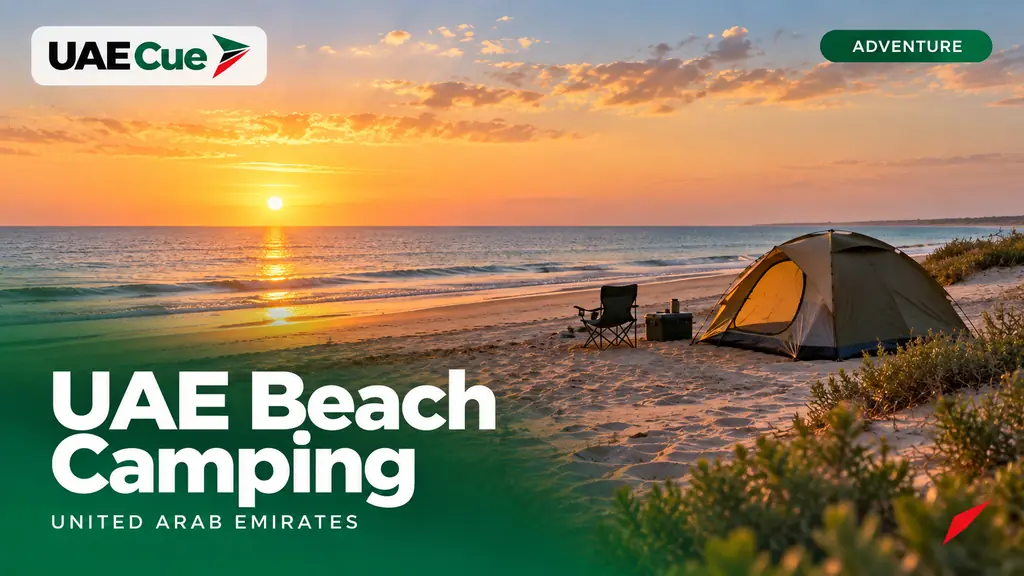
Beach camping is legal in the UAE only in specific places, and the rules change at each emirate’s border. Dubai allows caravans and trailers, not tents, on Jebel Ali Public Beach with a free 30-day Dubai Municipality permit. Ras Al Khaimah has banned camping on all public beaches since May 2022, leaving only licensed beach campgrounds. The most open coast is Fujairah, where Fujairah Tourism lists Al Aqah, Al Fiquet and Coral Bay for beach camping, and Abu Dhabi’s remote Al Dhafra shoreline around Mirfa. Wherever you pitch, stay above the high-tide line, keep out of protected beaches and mangroves, and take all rubbish home: unauthorised camping is fined up to AED 2,000 in Sharjah and Fujairah.
At a glance
- Dubai
- Caravans and trailers only, Jebel Ali Public Beach, free 30-day permit
- Abu Dhabi
- Open Al Dhafra shoreline such as Mirfa; city beaches are day use only
- Ras Al Khaimah
- Public beaches banned since May 2022; licensed campgrounds only
- Fujairah
- Al Aqah, Al Fiquet (families only), Coral Bay; camping areas at Dadna and Dibba
- Fines
- Up to AED 2,000 for unauthorised camping or litter in Sharjah and Fujairah
- Season
- November to April
- Tide
- Two highs a day, about an hour later each day; bigger near full and new moon
Last checked: 14 October 2026 against Dubai Municipality, Ras Al Khaimah Municipality, Fujairah Tourism and Umm Al Quwain Municipality announcements. Beach rules are local and change; check signs on the beach.
On this page
- Where you can camp on a beach, emirate by emirate
- Dubai: caravans at Jebel Ali Public Beach
- Abu Dhabi: the Al Dhafra coast
- Ras Al Khaimah: public beaches are off limits
- Fujairah: the most open coast
- Sharjah, Ajman and Umm Al Quwain
- How to read the tide
- Beaches and places to avoid
- Fines and rules
- Beach camping checklist
- Beach camping FAQs
Where you can camp on a beach, emirate by emirate
| Emirate | Beach camping | Permit | Where |
|---|---|---|---|
| Dubai | Caravans and trailers only; no tents on public beaches | Free Dubai Municipality permit, 30 days | Jebel Ali Public Beach |
| Abu Dhabi | Small family trips on open, remote shoreline | Not for a night or weekend; ask the municipality for groups and long stays | Mirfa and the Al Dhafra coast; glamping at Hudayriyat Island |
| Sharjah | Only in designated areas | Ask Sharjah Municipality; fines up to AED 2,000 | Check before you go, especially on the east coast |
| Ajman | No published rule for tents on beaches | Ask Ajman Municipality | Keep out of the Al Zorah mangrove reserve |
| Umm Al Quwain | Seasonal winter camps for Umm Al Quwain citizens | Winter permit, AED 2,000 plus AED 10,000 deposit | Aqran and Al Thunaiyah areas |
| Ras Al Khaimah | Banned on public beaches | No permit exists for public beaches | Licensed beach campgrounds only |
| Fujairah | Allowed at listed beaches | Use listed spots; fines up to AED 2,000 elsewhere | Al Aqah, Al Fiquet, Coral Bay, Dadna, Dibba |
Dubai: caravans at Jebel Ali Public Beach
Dubai Municipality designated Jebel Ali Public Beach, near Exit 7 on Sheikh Zayed Road towards Abu Dhabi, for caravan and trailer camping in 2020, after the old caravan area at Al Sufouh closed. It is the only beach in Dubai where you can stay overnight.
- Who: owners of a registered caravan, camping van or trailer; residents and visitors.
- Cost: free.
- How: apply online through Dubai Municipality’s “NOC for caravan camping on public beaches” service, with the vehicle registration, a photo of the vehicle and an Emirates ID, or a passport for visitors. The permit is issued immediately by email.
- Length: 30 days. A new permit for the same caravan can be issued 15 days after the last one ends.
- Tents: not allowed on Dubai’s public beaches, including Kite Beach, Al Mamzar and the Jumeirah beaches.
Check the Dubai Municipality announcement and the service page for the current terms. For desert options, see camping in Dubai.
Abu Dhabi: the Al Dhafra coast
Abu Dhabi city beaches, including Corniche Beach and Saadiyat, are for day use only. Families camp on open shoreline in Al Dhafra, the western region: Mirfa Beach, about 1.5 hours west of the city, is long and calm, and Visit Abu Dhabi has suggested the shoreline between the Shuweihat power complex and Al Hamra for beach camping. Keep clear of fenced, government and private land. For a serviced option, Bab Al Nojoum runs beachfront tents and glamping at Hudayriyat Island and Al Mugheirah. See camping in Abu Dhabi for the full rules.
Ras Al Khaimah: public beaches are off limits
On 17 May 2022, Ras Al Khaimah Municipality banned camping on all public beaches after complaints about tents pitched near the shore outside allocated sites, and said no permit allows camping on open beaches. We found no sign the ban has been lifted. Beach camping in RAK now means a licensed campground, such as Longbeach Campground, with beachfront domes and tents, or resort glamping. Mountain camping continues at licensed sites on Jebel Jais. RAK Municipality’s call centre is 800661.
Fujairah: the most open coast
Fujairah Tourism lists three beach camping spots: the wide sands of Al Aqah, opposite Snoopy Island; the rocky stretch of Al Fiquet beach, which is for families only and has food trucks at weekends; and Coral Bay, a tiny, sheltered beach facing the mountains of Dibba Bay. Dadna Beach and Dibba also have camping areas, with toilets and showers at Dadna. Stay at the listed spots: pitching tents in unauthorised areas, or leaving litter, can be fined up to AED 2,000. Details for each beach are in Fujairah beaches.
Sharjah, Ajman and Umm Al Quwain
- Sharjah: camping is only allowed in designated areas, and Sharjah fines unauthorised camping or littering up to AED 2,000. Barbecues are only allowed in designated areas. On the east coast, some guides list a camping site at Al Luluyah Beach in Khorfakkan; confirm with the municipality first.
- Ajman: Ajman publishes no rule on beach tents. Blogs recommend the Al Zorah coast, but much of it is a protected mangrove reserve, so ask Ajman Municipality before you pitch.
- Umm Al Quwain: the municipality issues winter camping permits in the Aqran and Al Thunaiyah areas, from November to the end of April, for 3 to 6 months, at AED 2,000 with a refundable AED 10,000 deposit. They are for Umm Al Quwain citizens and private family use only.
How to read the tide
The UAE’s coasts have two high tides and two low tides a day, and each high comes roughly 50 minutes later than the day before. The range is modest, usually about 1 to 2 metres between low and high water, but on a flat beach that can move the waterline tens of metres in a few hours.
- Find the high-tide line: look for the strandline of dry seaweed, shells and debris; pitch well above it, and higher still on a windy night.
- Check the times: the National Centre of Meteorology’s daily marine forecast lists high and low tide times for the Arabian Gulf and the Gulf of Oman; tide apps work too.
- Watch the moon: the biggest tides, called spring tides, come a day or two after the full and new moon, around 24 November and 24 December, and 9 November and 9 December in late 2026.
- Night high tides: if high water falls after midnight, pitch earlier in the day when you can still see where the sand is damp.
- Cars: never park on sand below the strandline, and do not drive along the shore; many beaches ban vehicles.
- Wind: winter northwesterly winds (shamal) can push water higher than forecast on the west coast; the east coast gets bigger swell when the sea is rough.
Beaches and places to avoid
- Turtle nesting beaches: such as Saadiyat in Abu Dhabi, where hawksbill turtles nest in the warmer months.
- Mangroves and marine reserves: including Al Zorah, the Umm Al Quwain lagoons and Kalba; camping and fires are not allowed, and the mosquitoes are fierce.
- City and hotel beaches: day use only.
- Lagoons and creeks with strong tidal flow.
- Any beach with a no-camping sign, whatever a blog says.
Fines and rules
| Offence | Penalty |
|---|---|
| Pitching tents in unauthorised areas (Sharjah, Fujairah) | Up to AED 2,000; double for repeat offences |
| Leaving rubbish (Sharjah, Fujairah) | Up to AED 2,000 |
| Dumping or burning waste, federal law | Up to AED 30,000 for individuals |
| Barbecuing outside designated areas (Sharjah) | AED 500 reported |
| Harming protected species, federal law | From AED 10,000, with possible jail |
Beach camping checklist
- Sand pegs or bags to fill with sand; normal pegs will not hold.
- A raised grill or fire pit, charcoal and water to put it out; never bury hot coals.
- Plenty of drinking water; most beaches have no taps.
- Bin bags for everything you bring.
- Insect repellent, a torch and a power bank.
- Water shoes for rock, coral and stingrays; shuffle your feet when wading.
- Warm layers: winter nights on the coast drop to about 15°C, with dew by morning.
- Adventure activities in the UAE: desert, water, camping and wheels by season.
- Camping in the UAE: desert and mountain rules in every emirate.
- Al Wathba Lake Camp: the free official campsite near Abu Dhabi.
- Stargazing in the UAE: dark-sky spots for a night out.
Beach camping FAQs
Can you camp on the beach in the UAE?
Yes, but only in permitted places: caravans at Jebel Ali Public Beach in Dubai with a free permit, listed beaches in Fujairah such as Al Aqah, the remote Al Dhafra coast in Abu Dhabi, and licensed beach campgrounds. Ras Al Khaimah bans camping on public beaches.
Can you pitch a tent on a Dubai beach?
No. Tents are not allowed on Dubai’s public beaches. Caravans and trailers can stay at Jebel Ali Public Beach for up to 30 days with a free Dubai Municipality permit.
How do I get the Jebel Ali caravan camping permit?
Apply online through Dubai Municipality’s caravan camping NOC service with the vehicle registration, a photo of the vehicle and your Emirates ID or passport. It is free and issued immediately.
Is beach camping allowed in Ras Al Khaimah?
Not on public beaches. Ras Al Khaimah Municipality banned it in May 2022 and says no permit exists. Use a licensed beach campground instead.
Where can I camp on the beach in Fujairah?
Fujairah Tourism lists Al Aqah, Al Fiquet (families only) and Coral Bay, and Dadna and Dibba have camping areas.
How do I know where the high tide will reach?
Look for the line of dry seaweed and shells on the sand and pitch well above it, check the National Centre of Meteorology’s tide times, and allow extra room around full and new moon.
What is the fine for camping in the wrong place?
Sharjah and Fujairah fine up to AED 2,000 for pitching in unauthorised areas or leaving litter, and federal waste and wildlife laws carry far higher penalties.