
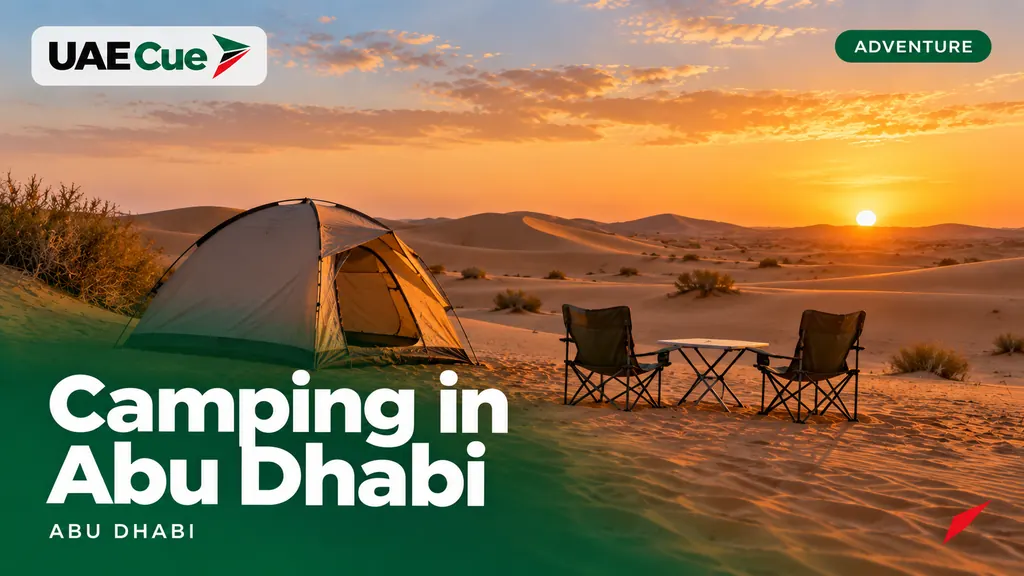
In Abu Dhabi, a family can camp for a night or a weekend in open, non-protected desert without a permit, but camping is banned in nature reserves, and organised group camps and long stays need a municipal permit. The easiest legal option is the free Al Wathba Lake Camp, about 45 minutes from the city, with 13 tent and RV sites, toilets and BBQ areas. For real dunes, families drive to Al Khatim or Al Khaznah on the Al Ain road, about an hour away, or to Liwa for the biggest dunes. On the coast, the Mirfa and Al Dhafra beaches are popular. Camp from November to March, take every scrap of rubbish home, and never camp in a wadi when rain is forecast.
At a glance
- One night in open desert
- No permit needed outside protected areas
- Needs a permit
- Organised group camps, events and long stays: ask the municipality
- Banned
- Nature reserves such as Al Wathba Wetland Reserve and the Fossil Dunes, private land and farms
- Easiest free site
- Al Wathba Lake Camp: 13 sites, toilets, BBQ areas
- Closest dunes
- Al Khatim, about 80 km and 1 hour from the city
- Season
- November to March
Last checked: 13 October 2026. Abu Dhabi does not publish a single camping rulebook; check the Department of Municipalities and Transport and the Environment Agency Abu Dhabi before a group trip.
On this page
Where you can camp, and where you cannot
| Place | Can you camp? | Permit? |
|---|---|---|
| Al Wathba Lake Camp | Yes, in the 13 marked sites | No; first come, first served |
| Open desert (Al Khatim, Al Khaznah, Al Razeen, Liwa) | Yes, for families, outside protected areas | Not for a night or a weekend |
| Al Dhafra coast and Mirfa beach | Yes, on open shoreline away from facilities and private land | No for small family trips; watch for local notices |
| Licensed camps and glamping sites | Yes | The operator holds the licence |
| Abu Dhabi city beaches and parks | No overnight camping; day use only | Not available |
| Nature reserves (Al Wathba Wetland Reserve, Al Wathba Fossil Dunes, Mangrove National Park, wildlife and houbara reserves) | No | Entry only with Environment Agency Abu Dhabi permission |
| Private land, farms, military and fenced government areas | No | Not available |
| Wadis and low ground | Never during rain forecasts | Not applicable |
Abu Dhabi has no blanket ban on camping in its open desert, and families pitch tents every winter weekend. The line is protected land: entering the Al Wathba reserve without a permit once led the Environment Agency Abu Dhabi to issue fines totalling AED 165,000, and a company was fined AED 150,000 for repeatedly damaging the rare Al Barqa desert formations in Al Dhafra. Al Dhafra’s municipal authorities have also warned against unauthorised camps and gatherings in public areas.
When you need a permit
- Organised group camps, club meets, corporate camps and ticketed gatherings: clear them with the relevant municipality first.
- Long stays: camps of weeks or months in one spot need a seasonal permit from the local municipality, with a fee.
- Reserves and protected areas: entry, let alone camping, needs Environment Agency Abu Dhabi permission.
- Beach events and anything with commercial activity need municipal approval.
For a short private trip, families do not need paperwork. Check current rules through Abu Dhabi’s government services on TAMM before organising anything larger.
The best camping spots
Al Wathba Lake Camp: free, with facilities
The easiest place to start: 13 campsites around a lake for about 120 campers in tents or RVs, 24 BBQ and picnic areas, a 1,400 m walking path, a 1,200 m pump track for bikes, volleyball courts, playgrounds, toilets and parking, free and open 24 hours, about 45 to 50 minutes from the city by ordinary car. There is no booking system, so arrive early on winter weekends. Full details in our Al Wathba Lake Camp guide.
Al Khatim: real dunes in an hour
About 80 km east of the city along the Abu Dhabi to Al Ain road (E22), Al Khatim has the closest proper dunes, about 50 to 60 minutes away. You need a 4×4 with tyres let down, recovery gear and ideally a second car to camp among the dunes; ordinary cars should stay on firm ground near the tarmac. Licensed operators also run overnight camps here.
Al Khaznah and Al Razeen: quieter open desert
Al Khaznah, near Al Faya on the way to Al Ain, and Al Razeen to the south of the city are wide, open desert areas popular with weekend campers. There are no facilities, so bring everything, including water and toilet supplies.
Liwa and Tal Moreeb: the biggest dunes
On the edge of the Empty Quarter, about 2.5 hours from Abu Dhabi, the dunes around the Liwa Oasis are among the tallest in the region and its skies among the darkest. Camping is best as a convoy with dune-driving experience. During the Liwa Festival from December, Tal Moreeb becomes a huge camping scene.
Mirfa and the Al Dhafra coast: beach camping
Mirfa Beach, about 1.5 hours west of the city, is a long, quiet beach with calm water, and Visit Abu Dhabi suggests the open shoreline between the Shuweihat Power Complex and Al Hamra Airport for beach camping. Buy supplies in the nearest town, keep clear of fenced and government property, and watch the tide line when you pitch. More options in our beach camping guide.
Best time to camp
- November to March: the best months, with cool nights; December and January nights in the desert can be cold.
- Late October and April: possible, but daytime heat makes setting up hard; pitch late in the afternoon.
- May to September: too hot for overnight camping.
Rules differ by emirate: Dubai issues long-stay winter camp permits, and Sharjah and Fujairah fine campers for pitching in unauthorised areas. See camping in the UAE for every emirate.
Paid camps and glamping
| Site | Where | What you get |
|---|---|---|
| Jebel Hafit Desert Park | Below Jebel Hafeet, Al Ain | Own-tent pitches from about AED 100 a night, plus tents, domes and bubbles; history trails nearby |
| Bab Al Nojoum | Hudayriyat Island and Al Mugheirah, Al Dhafra | Beachfront canvas tents, vintage campervans and glamping villas |
| Camp Nujum | Qasr Al Sarab, Liwa | Traditional tents with archery, camel treks, sandboarding and falconry |
| Arabian Nights Village | Desert outside Abu Dhabi | Heritage-style rooms with fat biking, camel and quad rides |
| Green Mubazzarah chalets | Foot of Jebel Hafeet | Chalets beside the hot springs park |
| Licensed desert camps | Al Khatim and elsewhere | Serviced Bedouin-style camps with dinner and breakfast, from about AED 500 a person |
The rules and fines
- Rubbish: take every piece home. Under Federal Law No. 12 of 2018 on waste, dumping or burning waste outside designated areas can bring fines of up to AED 30,000 for individuals.
- Nature: do not cut trees or shrubs for firewood, drive over vegetation or disturb wildlife; under Federal Law No. 24 of 1999, damaging protected species or reserves carries heavy fines and possible jail.
- Fires: use a raised fire pit or grill, never a fire on bare sand, and put it out completely with water or sand.
- Wadis and rain: under Federal Decree-Law No. 14 of 2024, entering valleys or flood zones during rain carries a fine of AED 2,000, 23 traffic points and a 60-day vehicle impoundment.
- Driving: stay on existing tracks near camps and reserves, and keep away from fenced areas.
- Noise and privacy: keep music down, and camp well away from other families and farms.
Safety
- Never run heaters, grills or gas lamps inside a tent; carbon monoxide poisoning in tents is a recurring winter danger.
- Do not pitch at the bottom of a dune or in low ground that can flood.
- Tell someone your location, carry a charged power bank and save the pin.
- Check the forecast: strong winds, fog and rain are common in winter; follow National Center of Meteorology warnings.
- Desert nights get cold, often near 10°C in January in the interior; pack warm layers.
What to pack
- A tent with sand pegs, sleeping bags and mats, and warm clothes.
- At least 5 litres of water per person per day, plus food in sealed boxes.
- A raised grill, charcoal, a fire extinguisher and a first-aid kit.
- Rubbish bags, a shovel and a portable toilet for sites without facilities.
- For dunes: a tyre gauge, compressor, recovery boards and a tow rope.
- Adventure activities in the UAE: desert, water, camping and wheels by season.
- Camping in the UAE: the rules emirate by emirate.
- Camping in Dubai: Al Aweer permits and legal spots.
- Al Wathba Salt Lake: sunrise next to the lake camp.
- Stargazing in the UAE: the darkest desert skies.
- Al Quaa Milky Way spot: the darkest desert camp spot near Abu Dhabi.
Camping in Abu Dhabi FAQs
Do you need a permit to camp in Abu Dhabi?
Not for a family night or weekend in open, non-protected desert. Organised group camps, events and long stays need a municipal permit, and camping in nature reserves is not allowed.
Where can I camp for free in Abu Dhabi?
Al Wathba Lake Camp is free, with 13 sites, toilets and BBQ areas. Open desert at Al Khatim, Al Khaznah, Al Razeen and Liwa, and beaches in Mirfa and Al Dhafra, are also free but have no facilities.
Is camping allowed on Abu Dhabi beaches?
Not on the city’s public beaches, which are for day use. Families camp on open shoreline in Al Dhafra, such as Mirfa, away from fenced and private areas.
How far is Al Khatim from Abu Dhabi?
About 80 km, or 50 to 60 minutes along the Abu Dhabi to Al Ain road (E22). You need a 4×4 to camp in the dunes.
Can I camp in Al Ain?
Yes, at managed sites such as Jebel Hafit Desert Park, which has own-tent pitches and glamping, or in the chalets at Green Mubazzarah.
What are the fines for camping in the wrong place?
Entering protected reserves has led to fines of up to AED 165,000 for a group, littering can bring federal fines of up to AED 30,000, and entering wadis during rain carries an AED 2,000 fine and a 60-day vehicle impoundment.