
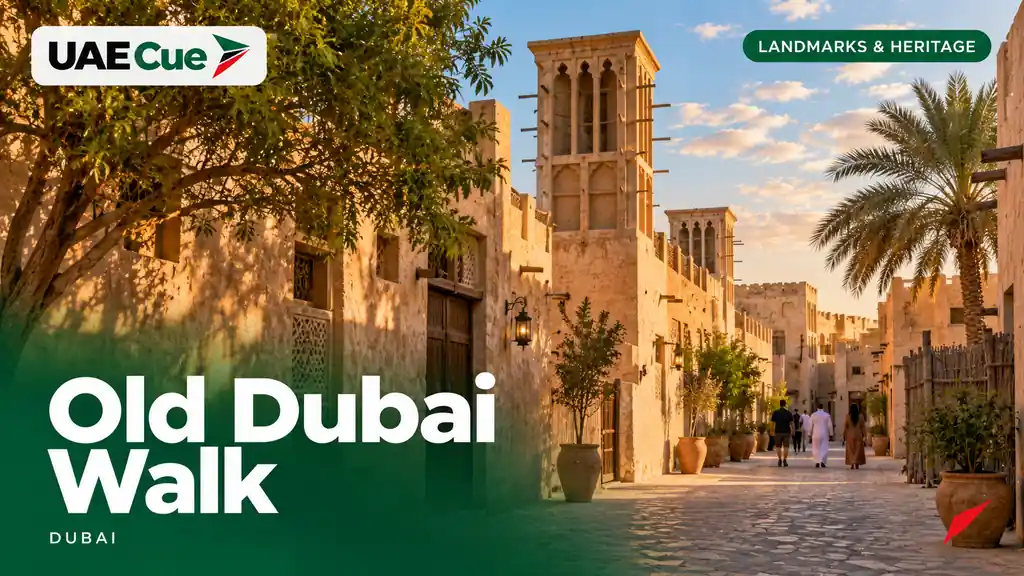
The classic Old Dubai walk takes about 3 to 4 hours: start in the Al Fahidi Historical Neighbourhood, walk through the Bur Dubai Old Souk (the Textile Souk) to Al Shindagha Museum, cross Dubai Creek by abra for AED 1, then explore the Spice, Gold and Perfume Souks in Deira. The souks open roughly 10am to 10pm, but many stalls close from about 1pm to 4pm and on Friday they open only in the late afternoon, so either start at 9am or go from 4pm into the evening, which is the liveliest time. Al Fahidi and the souks are free; Al Shindagha Museum costs AED 50 for adults. Wear comfortable shoes and modest clothing, carry some cash, and haggle politely.
At a glance
- Route
- Al Fahidi, Old Souk, Al Shindagha, abra, Spice Souk, Gold Souk, Perfume Souk
- Distance
- About 3 km on foot plus the abra crossing
- Time
- 3 to 4 hours, or a full day with the museum
- Souk hours
- About 10am to 10pm; many stalls close about 1pm to 4pm; Friday from about 4pm
- Abra
- AED 1 per person on a traditional abra, paid in cash on board
- Al Shindagha Museum
- AED 50 adults, AED 20 students; children free; 10am to 8pm
- Best time
- October to April; 4pm to 9pm, or 9am to 1pm
Last checked: 13 October 2026 against Dubai Culture’s Al Shindagha visitor page and current souk listings. Individual shops set their own hours.
On this page
The walk, stop by stop
| Stop | Walk from previous | Allow | Cost |
|---|---|---|---|
| 1. Al Fahidi Historical Neighbourhood | Start | 1 hour | Free |
| 2. Bur Dubai Grand Mosque and the Old Souk (Textile Souk) | About 5 to 10 minutes | 30 to 45 minutes | Free |
| 3. Al Shindagha Museum | About 15 minutes along the Creek | 1.5 to 2 hours | AED 50 adults |
| 4. Abra from Bur Dubai Old Souk station to Deira Old Souk station | About 15 minutes back along the Creek | 5 to 10 minutes | AED 1 |
| 5. Spice Souk | 2 minutes from the abra | 30 minutes | Free |
| 6. Gold Souk | About 5 minutes | 30 minutes | Free to browse |
| 7. Perfume Souk (Sikkat Al Khail Street) | Next to the Gold Souk | 20 to 30 minutes | Free to browse |
| 8. Back across by abra to Al Seef for dinner | About 10 minutes | 1 hour | AED 1 plus dinner |
1. Al Fahidi Historical Neighbourhood
Also called Al Bastakiya, this is the best-preserved old quarter in Dubai: coral-stone and gypsum houses with wind towers, built from the late 19th century by merchants from Bastak in Persia. Wander the shaded lanes, courtyard galleries and small museums such as the Coffee Museum, and stop at the Arabian Tea House for breakfast. The Sheikh Mohammed Centre for Cultural Understanding here runs cultural breakfasts and lunches and heritage tours. Al Fahidi Fort, the old Dubai Museum on the edge of the quarter, is still closed for restoration.
2. The Bur Dubai Old Souk (Textile Souk)
Walk north through the covered lanes of the Old Souk, also known as the Dubai Textile Souk, whose traders came from India, Pakistan and Iran, near the Bur Dubai Grand Mosque with its tall minaret. Stalls sell fabrics, pashminas, kaftans, lanterns, scarves and souvenirs, and tailors can make clothes in a day or two. Expect friendly but persistent shopkeepers; a smile and a “no, thank you” is enough.
3. Al Shindagha Museum
Follow the Creek to the restored Al Shindagha Historic District at the mouth of Dubai Creek, where the ruling family once lived. It is Dubai’s largest heritage museum, spread through more than 20 restored houses (see the section below).
4. The abra crossing
Walk back to the Bur Dubai Old Souk abra station and cross the Creek on a traditional wooden abra, the water taxi that has carried traders since the city’s early days. The ride takes a few minutes, costs AED 1 per person in cash, and leaves when the boat fills; air-conditioned abras cost a little more. The view of the dhows, wind towers and both banks is one of the best in Dubai.
5 to 7. The Deira souks
- Dubai Spice Souk: lanes of sacks piled with saffron, cardamom, dried lemons, frankincense, rose buds, dates and teas, many run by Iranian traders. The covered Grand Souk Deira next door sells household goods, spices and textiles. Fewer stalls remain than in the past, but it is still the most atmospheric stop.
- Dubai Gold Souk (Deira Gold Souk): more than 300 jewellers under a wooden-roofed arcade, with shop windows of gold, diamonds and pearls. Browsing is free and the window displays are a sight in themselves.
- Deira Perfume Souk: a couple of streets along Sikkat Al Khail Street selling oud, attars, bakhoor incense and sandalwood; shopkeepers will blend a scent for you on the spot.
Opening hours and the closure cue
| Place | Hours |
|---|---|
| Gold, Spice and Perfume Souks | About 10am to 10pm Saturday to Thursday; many stalls close about 1pm to 4pm; Friday from about 4pm |
| Bur Dubai Old Souk | Similar to the Deira souks, with a midday lull |
| Al Fahidi lanes | Open at all times; small museums keep daytime hours |
| Al Shindagha Museum | Daily 10am to 8pm; last entry 7pm |
| Traditional abras | Early morning to around midnight |
Closure cue: do not plan the souks between about 1pm and 4pm, or on Friday before about 4pm, when many shops are shut. Use those hours for Al Shindagha Museum or lunch.
Two ways to do it
Morning version (9am to 1pm)
- 9am Al Fahidi before the heat, 10am the Old Souk as it opens, 11am Al Shindagha Museum, 12:30pm abra to Deira for the Spice and Gold Souks before the midday break.
Evening version (4pm to 9pm, best)
- 4pm Al Shindagha Museum, 5:30pm the Old Souk and Al Fahidi at golden hour, 6:30pm abra across at dusk, 7pm the Deira souks at their busiest, 8:30pm abra back to Al Seef for dinner by the water.
Al Shindagha Museum
Run by Dubai Culture, Al Shindagha Museum fills the restored houses of the Al Shindagha Historic District with the story of Dubai and its Creek, using films, models and interactive displays. Highlights include the restored house of Sheikh Saeed Al Maktoum, ruler from 1912 to 1958, and the Perfume House, which explains the role of oud, frankincense and fragrance in Emirati life.
| Ticket | Price |
|---|---|
| Adult | AED 50 |
| Group (per person) | AED 40 |
| Student | AED 20 |
| Children | Free |
| People of determination | Free |
| UAE nationals over 60 | Free |
It opens daily from 10am to 8pm, with last entry at 7pm; allow 1.5 to 2 hours. Dubai Culture lists the adult ticket as covering entry to two houses, so ask at the desk which pavilions are open on the day. Valet parking is available by the drop-off area, and guides can be booked through the museum’s website. Children under 12 must be with an adult.
Haggling: how it works
- Expect to bargain on spices, textiles, souvenirs and perfume oils; first prices for tourists are usually high.
- Ask the price first, then offer noticeably less and meet in the middle; keep it friendly and unhurried.
- Buying several items from one shop is the easiest way to a better price.
- Walk away politely if the price is not right; you will often be called back.
- Cash helps at small stalls, though many shops take cards.
- Do not haggle once you have agreed a price, and do not start bargaining for something you do not intend to buy.
Other souks in Dubai
- Souk Madinat Jumeirah: a modern, Arabian-style souk on waterways facing the Burj Al Arab, with fixed-price shops and restaurants.
- Souk Al Bahar: a small souk-style mall in Downtown, next to the Dubai Fountain.
- Naif Souk: rebuilt after a fire, a busy local market in Deira for fabrics, abayas and household goods.
- Weekend markets: the winter craft and food markets; see weekend markets in Dubai.
Practical tips
- Dress: cover shoulders and knees; this is a traditional area with working mosques.
- Photos: ask before photographing shopkeepers and people.
- Touts: ignore offers of “copy” watches and bags in the Old Souk lanes.
- Parking: very limited near the Deira souks; take a taxi, or park at Al Seef, near Al Fahidi or around Al Ghubaiba.
- Heat: from May to September, do the walk after 5pm.
- Ramadan: souks open later and stay open late into the night.
- Al Seef: the heritage waterfront for dinner.
- Waterfront Market: Dubai’s fish market in Deira.
- Dubai landmarks: tickets, timings and best light.
- Things to do in Dubai: by area and time of day.
- Global Village pavilions: world shopping in one park.
- Heart of Sharjah: Sharjah’s restored old town and souks.
- Mina Zayed markets: Abu Dhabi’s working souks.
Old Dubai and souks FAQs
What are the Dubai souk timings?
Roughly 10am to 10pm from Saturday to Thursday, with many stalls closing from about 1pm to 4pm, and from about 4pm on Friday. Each shop sets its own hours.
How much is the abra across Dubai Creek?
AED 1 per person on a traditional abra, paid in cash on board. Air-conditioned abras cost a little more.
How much is Al Shindagha Museum?
AED 50 for adults, AED 40 per person in groups and AED 20 for students. Children, people of determination and UAE nationals over 60 enter free. It opens 10am to 8pm daily.
Can you bargain in the Dubai souks?
Yes. Haggling is expected for spices, textiles, souvenirs and perfume oils. Ask the price, offer less and meet in the middle politely.
Where is the Old Souk in Dubai?
The Bur Dubai Old Souk, also called the Textile Souk, runs along the Creek between Al Fahidi and Al Shindagha. The Spice, Gold and Perfume Souks are across the Creek in Deira, a short abra ride away.
How long do you need for Old Dubai?
About 3 to 4 hours for the walk and souks, or most of a day if you include Al Shindagha Museum and dinner at Al Seef.